
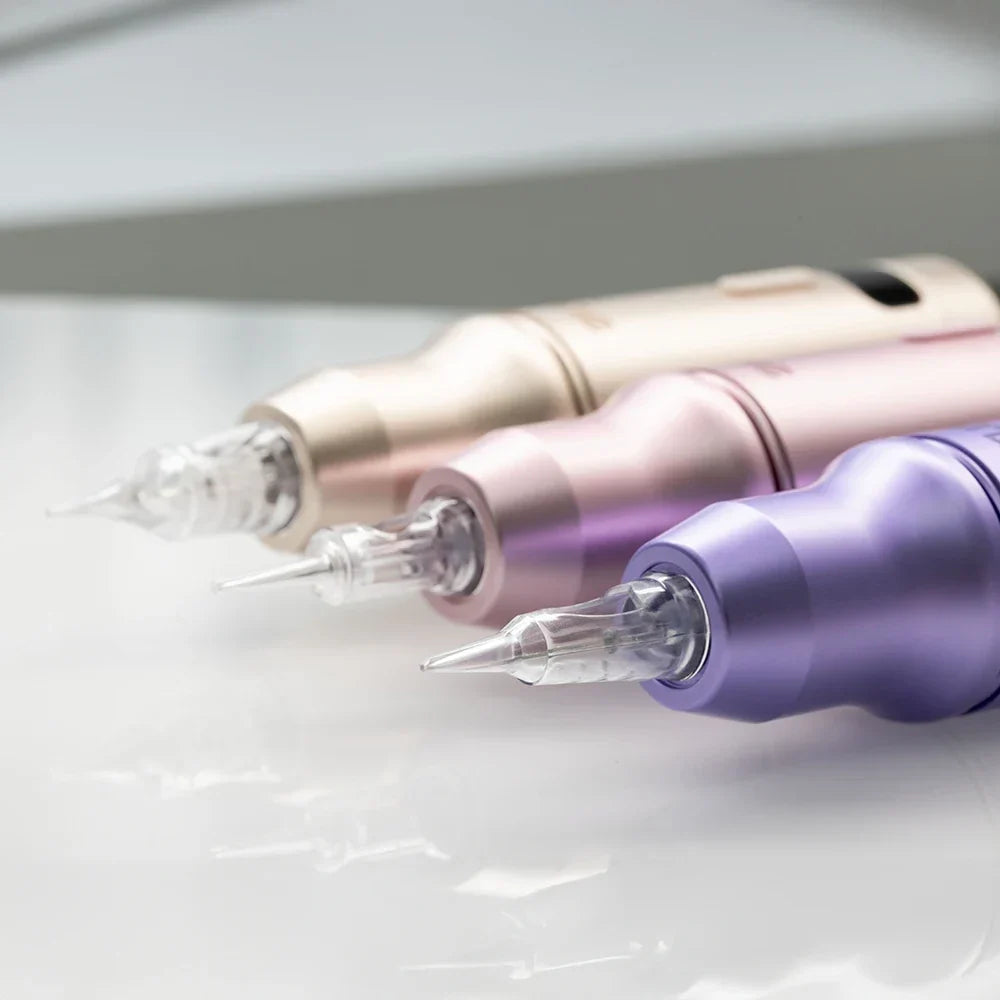
Při výběru cartridge pro permanentní make-up se obvykle soustředíme na tři údaje: průměr jehly, konfiguraci a taper. Na obalu vidíme označení jako 0,25 1RL LT nebo 0,30 1RL LT a předpokládáme, že nám to řekne, jak se cartridge bude chovat.
To je ale jen část obrazu.
Cartridge pro PMU není jen jehla vložená do plastového pouzdra. Je to ucelený mechanický systém, který tvoří jehla, jehlová tyčka, membrána, vedení, špička a zadní část, která se spojuje se zdvihátkem strojku.
Každý z těchto prvků může ovlivnit odpor, stabilitu i způsob, jakým se jehla pohybuje. Proto se dvě cartridge s označením 0,30 1RL Long Taper mohou chovat různě, i když se jejich parametry na papíře zdají stejné.
Cartridge se stává součástí pohonu
Jakmile je cartridge nasazená, zdvihátko strojku už nepohání jen vlastní vnitřní mechanismus. Musí také překonat odpor membrány, urychlit hmotu pohyblivých částí cartridge a udržet jejich pohyb po celý pracovní cyklus.
Cartridge tedy pro motor a jeho řídicí systém představuje skutečnou mechanickou zátěž.
V praxi se to dá snadno pozorovat. Stejný strojek může bez cartridge znít a reagovat jinak než po jejím nasazení. Změna značky cartridge může ovlivnit i zvuk, vnímaný odpor, odezvu jehly a chování strojku na nízkých frekvencích.
To automaticky neznamená, že jedna cartridge je dobrá a druhá špatná. Znamená to jen, že mají jinou mechanickou konstrukci.
Membrána má víc než jednu funkci
Membrána se spojuje hlavně s ochranou vnitřku cartridge a gripu strojku před pigmentem a tělními tekutinami. Je to nesmírně důležitá funkce, ale ne jediná.
U většiny moderních cartridge membrána:
-
vytváří fyzickou bariéru, která omezuje pronikání tekutin směrem ke strojku,
-
pomáhá vracet jehlu zpět po každém impulzu zdvihátka,
-
stabilizuje pohyb jehlové sestavy,
-
vytváří určitý odpor, který musí pohon strojku překonat.
Norma EN 17169:2020, která se týká bezpečné a hygienické praxe při tetování, stanoví používání sterilních jehel nebo cartridge na jedno použití. Zdůrazňuje také význam fyzické bariéry, která brání vniknutí tekutin do gripu. Výrobek by se neměl používat, pokud je jeho sterilní obal poškozený nebo pokud vypršela jeho použitelnost. Samotné tvrzení „cartridge s membránou“ ale nenahrazuje dokumentaci výrobce, která účinnost bariéry potvrzuje. EN 17169:2020
Měkčí membrána
Membrána s nižším odporem potřebuje k deformaci menší sílu. Pohyb jehly pak může působit dynamičtěji, protože se na překonání vnitřního odporu cartridge spotřebuje menší část energie pohonu.
To ale automaticky neznamená, že jehla bude v kůži pracovat šetrněji.
Když se jehla pohybuje proti menšímu odporu, artistka může impulz vnímat jako rychlejší nebo přímější. Reakce tkáně však stále závisí na technice, frekvenci, délce zdvihu, vysunutí jehly, pracovním úhlu a tlaku ruky.
Tužší membrána
Tužší membrána vytváří větší protisílu. Může dávat silnější pocit stability nebo výraznější návrat jehly, ale zároveň zvyšuje zátěž pohonu.
Rozdíl je patrný hlavně při práci:
-
na nízkých frekvencích,
-
se strojkem s omezeným točivým momentem,
-
s větší konfigurací jehel,
-
s těžší jehlovou tyčkou cartridge,
-
s delším zdvihem.
Proto by se „měkká“ a „tuhá“ membrána neměly brát jako synonyma pro jemnou a agresivní pigmentaci. Tyto pojmy popisují především mechanické vlastnosti cartridge.
Stejná frekvence nemusí znamenat stejný pohyb jehly
Pokud strojek ukazuje 60 Hz, jeho cílem je 60 pracovních cyklů za sekundu. To nám ale neříká všechno o tom, jak se jehla chová pod zátěží.
U strojků bez aktivní regulace otáček může větší odpor cartridge způsobit výraznější pokles skutečné rychlosti. V systémech, které rychlost měří a elektronicky korigují, může řídicí jednotka zvýšit odezvu motoru, aby nastavenou frekvenci udržela.
I tak mohou dvě cartridge při zákroku působit různě. Řídicí jednotka může řídit rychlost pohonu, ale nezmění konstrukci špičky cartridge, tření ve vedení, hmotnost jehlové tyčky ani pružnost membrány.
Nastavení strojku proto vždy posuzujte s nasazenou cartridge.
Průměr jehly není průměr jejího hrotu
Údaj 0,20, 0,25, 0,30 nebo 0,35 mm označuje jmenovitý průměr dříku jedné jehly před nabroušením. Nepopisuje průměr hrotu, který se dotýká kůže.
Na tomto rozlišení záleží, protože tvar a vlastnosti hrotu určuje i jeho taper.
Dvě jehly o průměru 0,30 mm mohou mít například úplně jiné hroty. Jedna se může do špičky zúžit na kratším úseku, druhá se může zužovat postupně na mnohem delším úseku.
Samotné označení 0,30 mm nám tedy neřekne, jestli bude jehla působit tuze, pružně, ostře nebo stabilně.
Co je taper jehly?
Taper je délka úseku, na kterém se jehla postupně zužuje do hrotu. Ve specifikacích cartridge se nejčastěji používají tyto zkratky:
-
MT – Medium Taper,
-
LT – Long Taper,
-
XLT nebo ET – Extra Long Taper.
Tato označení nemusí u různých výrobců znamenat přesně stejnou délku taperu. Long Taper jedné značky se může lišit od Long Taper jiné značky. Porovnávat jen zkratky bez kontroly specifikací výrobce proto může být zavádějící.
Delší taper vytváří delší, štíhlejší hrot. Kratší taper ponechává více materiálu blíže ke špičce. To ovlivňuje tuhost hrotu, jeho interakci s tkání i chování pigmentu na jehle.
Neznamená to, že delší taper je vždy šetrnější nebo lepší. Vhodná volba závisí na:
-
typu tkáně,
-
viskozitě pigmentu,
-
požadovaném charakteru tečky,
-
pohybu ruky,
-
vysunutí jehly,
-
konfiguraci strojku.
Proč není jehla 0,25 mm vždy šetrnější než jehla 0,30 mm?
Tenčí jehla má menší průměr dříku, ale nepracuje izolovaně. Pokud je v cartridge s velmi měkkou membránou, dlouhým taperem a volnějším vedením, může se chovat dynamičtěji než silnější jehla ve stabilnějším systému.
Artistka může tenčí jehlu také vyrovnávat víc průchody, vyšší frekvencí nebo větším tlakem. Pak volba, která je formálně považovaná za „šetrnější“, nemusí vést k mírnější reakci tkáně.
Otázka by proto neměla znít jen:
Mám zvolit 0,25, nebo 0,30 mm?
Lepší otázka je:
Jak celá cartridge spolupracuje s mým strojkem, pigmentem, technikou a konkrétní tkání, na které pracuji?
Vedení jehly a konstrukce špičky
Během provozu by se jehla uvnitř špičky cartridge neměla pohybovat nepředvídatelně. Vedení ovlivňuje boční stabilitu a rozhoduje o tom, jestli se pohyb ze zdvihátka přenáší ve stálé ose.
Nadměrná vůle může způsobit:
-
výraznější boční pohyb,
-
nepravidelný zvuk,
-
změny ve způsobu ukládání teček,
-
rozstřikování pigmentu,
-
méně přesnou zpětnou vazbu při kontaktu jehly s kůží.
Příliš těsné vedení naopak může zvýšit tření. Strojek pak musí překonávat nejen odpor membrány, ale i další odpor mezi pohyblivými díly.
Důležitý je také tvar špičky cartridge. Úzká špička může poskytovat jinou oporu a jiný tok pigmentu než široká. Otevřená špička může zlepšit viditelnost jehly, zatímco uzavřenější konstrukce může pigment ve špičce zadržovat jinak.
Žádná z těchto možností není univerzálně lepší. Konstrukce musí odpovídat technice, pigmentu a způsobu práce artistky.
Proč stejné označení nezaručuje stejný výsledek?
Dvě cartridge 0,30 1RL LT se mohou lišit v těchto ohledech:
| Součást | Možný rozdíl |
|---|---|
| Membrána | Odpor, pružnost a vratná síla |
| Jehla | Ocel, leštění a přímost |
| Taper | Skutečná délka a geometrie |
| Jehlová tyčka | Hmotnost a tuhost |
| Vedení | Boční vůle a tření |
| Špička | Šířka, profil a tok pigmentu |
| Sestavení | Vystředění jehly a kvalita spojení |
| Bariéra | Celistvost těsnění a ochrana proti vniknutí tekutin |
Proto může výměna cartridge vyžadovat, aby artistka znovu upravila frekvenci, pohyb ruky nebo způsob nabírání pigmentu.
Jak otestovat novou cartridge pro PMU?
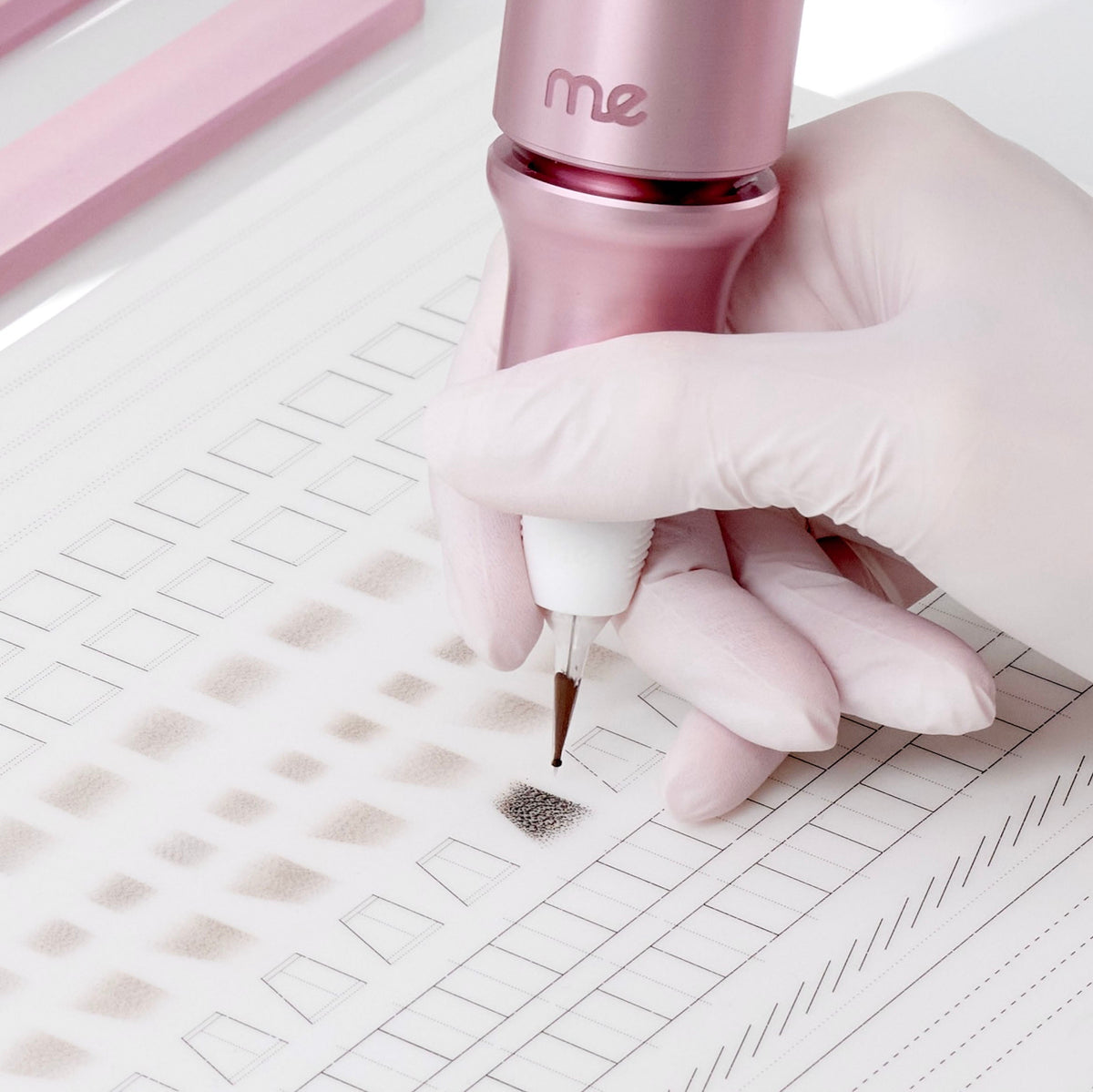
Novou cartridge nehodnoťte jen podle prvních pár sekund práce na klientce. Začněte vizuální kontrolou a testem na latexu.
1. Zkontrolujte obal
Cartridge by měla být sterilní, určená na jedno použití a uzavřená v nepoškozeném obalu. Norma ISO 11607-1 popisuje úlohu sterilních bariérových systémů při udržení sterility výrobku až do okamžiku použití. ISO 11607-1:2019
Cartridge nepoužívejte, pokud její obal:
-
je otevřený nebo roztržený,
-
je mokrý,
-
má poškozený spoj,
-
nemá jasně čitelné datum expirace nebo číslo šarže,
-
má prošlé uvedené datum expirace.
2. Sledujte jehlu
Před začátkem práce zkontrolujte, jestli jehla:
-
je ve špičce vystředěná,
-
není ohnutá,
-
viditelně nedře o jednu stranu špičky,
-
se pohybuje ve stálé ose,
-
se po každém cyklu plynule zatahuje zpět.
3. Poslouchejte strojek
Neobvyklý zvuk po nasazení cartridge může ukazovat na zvýšený odpor, tření nebo vadu konkrétní cartridge. Pokud jedna cartridge zní znatelně jinak než ostatní ze stejné šarže, vyměňte ji.
4. Začněte se známým nastavením
Používejte nastavení, jehož chování už znáte, místo abyste zároveň měnila cartridge, frekvenci, pigment i techniku. Snáz tak poznáte, která proměnná za rozdílem stojí.
5. Hodnoťte tečku, ne jen pocit
Při testu na latexu hodnoťte:
-
stejnoměrnost teček,
-
množství pigmentu uloženého při každém kontaktu,
-
rozstřikování pigmentu,
-
chování při pomalejším i rychlejším pohybu ruky,
-
odezvu na různých frekvencích.
Nejčastější chyba: vyrovnávat vadnou cartridge nastavením strojku
Pokud cartridge pracuje nerovnoměrně, zadrhává se nebo zní znatelně jinak, první reakcí by nemělo být zvýšení frekvence ani větší tlak.
Nejdřív cartridge vyměňte a ověřte, jestli problém přetrvává.
Snaha vyrovnat vadnou nebo nevhodně zvolenou cartridge může vést ke zbytečným změnám techniky. Artistka může začít pracovat rychleji, víc tlačit strojkem nebo opakovaně přejíždět stejné místo, i když zdroj problému leží v samotné cartridge.
Časté otázky
Je měkká membrána pro permanentní make-up vždy lepší?
Ne. Měkká membrána klade menší odpor, ale může také vést k přímějšímu pohybu jehly. Zda je vhodná, závisí na strojku, délce zdvihu, konfiguraci jehly a technice.
Chovají se cartridge se stejnými parametry stejně?
Ne. Označení informuje hlavně o průměru jehly, počtu jehel, konfiguraci a taperu. Nepopisuje odpor membrány, tření, hmotnost jehlové tyčky ani kvalitu vedení.
Která jehla je lepší: 0,25, nebo 0,30 mm?
Jedna odpověď neexistuje. Průměr je jen jednou z proměnných. Je třeba zohlednit i taper, tkáň, pigment, membránu, nastavení strojku a výsledek, kterého chcete dosáhnout.
Chrání membrána strojek úplně?
Vniknutí tekutin do gripu může omezit jen účinně utěsněná a ověřená bariéra. Marketingové tvrzení „s membránou“ není dostatečným důkazem, že cartridge účinně těsní.
Funguje univerzální cartridge s každým strojkem?
To, že cartridge jde fyzicky nasadit, nezaručuje stejnou mechanickou kompatibilitu. Rozdíly v délce jehlové tyčky, odporu membrány a konstrukci zadní části mohou ovlivnit výkon strojku.
Musím při přechodu na jinou značku cartridge měnit nastavení?
Ne vždy, ale chování jehly je třeba znovu posoudit. Pokud se změní odpor, tok pigmentu nebo charakter kontaktu, možná budete muset upravit techniku nebo frekvenci.
Závěr
Strojek pohyb vytváří a řídí, ale na jehlu ho nakonec přenáší cartridge.
Proto by se neměla brát jako neutrální spotřební materiál. Membrána, taper, průměr jehly, hmotnost jehlové tyčky, vedení a profil špičky tvoří jeden vzájemně propojený systém. Změna kterékoli z těchto součástí může ovlivnit chování celého systému.
Je také důležité vědět, že cartridge může být špatně navržená, nesprávně sestavená nebo mít kolísavou kvalitu. Jehla a membrána nejsou jediné prvky, na kterých záleží. Důležitá je i kvalita spojů, lícování dílů, vedení jehlové tyčky, konstrukce špičky a odvzdušňovací otvor. Každý z těchto prvků může ovlivnit odpor, plynulost pohybu, tok pigmentu a odezvu jehly pod zátěží.
Pokud strojek nepracuje správně, příčinou nemusí být vždy samotný strojek. Problém může být v konkrétní cartridge, její konstrukci, kvalitě výroby, určité výrobní šarži nebo v nedostatečné kompatibilitě se strojkem a zvolenou technikou.
Informovaná volba tedy není o hledání jedné „nejlepší jehly“. Jde o nalezení cartridge, která se strojkem, technikou, pigmentem a tkání spolupracuje tak, že tomu artistka rozumí, dokáže ji vědomě využívat a spolehlivě dosahovat stejných výsledků.

Napsat komentář
Všechny komentáře jsou před zveřejněním moderovány.
Tento web je chráněn službou hCaptcha a vztahují se na něj Zásady ochrany osobních údajů a Podmínky služby společnosti hCaptcha.